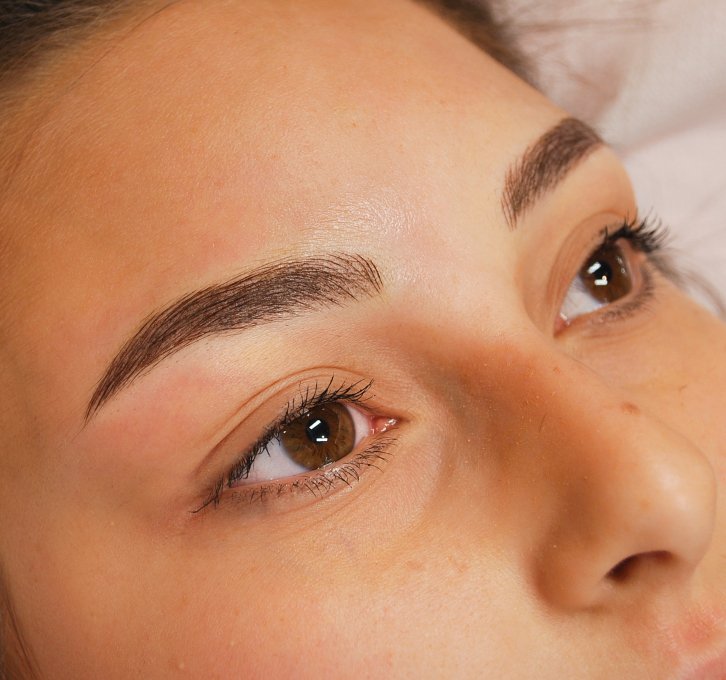




The Complete Guide to Natural-Looking Eyebrows
Natural-looking eyebrows are not created by simply drawing individual hairs. They are created through careful analysis of facial proportions, brow anatomy, skin characteristics, pigment behaviour and precise PMU technique.
If you are searching for Microblading in Groningen, you may already know that Microblading is designed to create the appearance of natural eyebrow hairs.
But professional Microblading is much more than creating a few hair strokes.
The quality of the final result depends on decisions made before the first stroke is created — from analysing the natural brow and selecting the correct colour to understanding skin type, hair direction, pigment implantation and the healing process.
At Aphrodite PMU in Groningen, Microblading is approached as a personalised eyebrow design rather than a standard template applied to every client.
This guide explains what Microblading really is, who it is suitable for, how the treatment works, what happens during healing, how long it lasts and what makes a natural-looking Microblading result truly professional.
What Is Microblading?
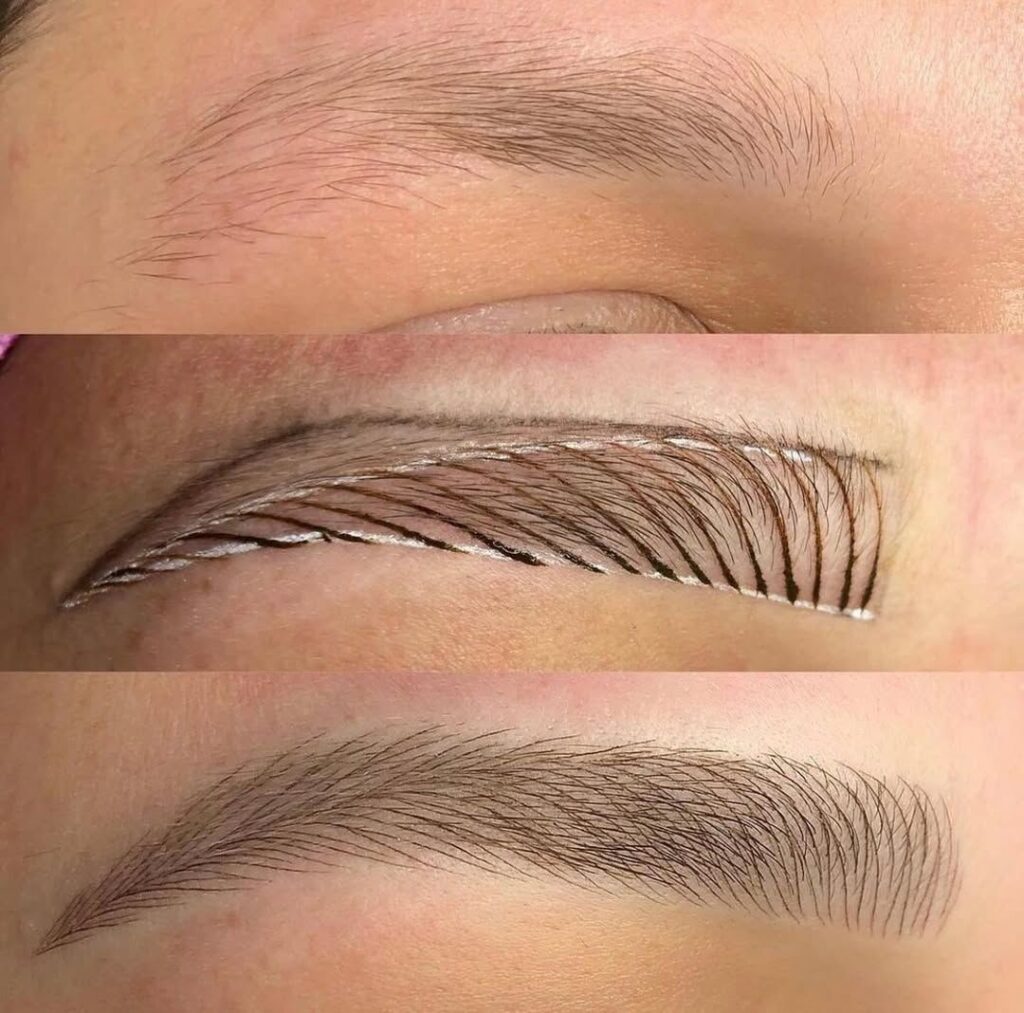
Microblading is a form of permanent makeup (PMU) used to create the appearance of individual eyebrow hairs by depositing cosmetic pigment into the skin.
Instead of creating a solid block of colour, Microblading uses fine, controlled strokes designed to visually resemble natural brow hairs.
The purpose can be to:
- Add the appearance of missing brow hairs
- Improve the visual definition of the eyebrows
- Create a fuller-looking brow
- Balance areas with sparse hair
- Enhance an existing brow shape
- Improve the appearance of asymmetry
- Create a soft and natural-looking eyebrow
The final result should work with the client’s natural features rather than looking like a drawn-on eyebrow.
Microblading is not the same as drawing an eyebrow
This distinction is important.
A natural eyebrow is not made from perfectly parallel lines.
Real brow hairs have:
- Different lengths
- Different directions
- Different densities
- Natural irregularities
- Transitions between different areas of the brow
Professional Microblading therefore requires an understanding of hair direction and brow anatomy, not simply the ability to make thin lines.
Microblading vs Powder Brows
One of the most common questions clients ask is:
“Should I choose Microblading or Powder Brows?”
There is no universal answer.
The best technique depends on the client’s natural brows, skin, desired appearance and the type of healed result they are looking for.
| Microblading | Powder Brows |
|---|---|
| Individual hair-like strokes | Pixelated/shaded pigmentation |
| Creates a hairstroke effect | Creates a soft makeup effect |
| Usually lighter and more natural-looking | Usually more defined |
| Works particularly well for selected skin types | Can be suitable for a broader range of skin types |
| Mimics the appearance of brow hairs | Mimics the appearance of brow makeup |
| Best when natural hair simulation is the priority | Best when softness, definition and density are desired |
There is also another possibility:
Combination Brows.
This technique combines hairstrokes with soft shading to create both a natural hair effect and additional definition.
At Aphrodite PMU, the technique is selected according to the individual client rather than treating one method as the best option for everyone.
Is Microblading Suitable for Every Skin Type?
No.
This is one of the most important points clients should understand before booking.
Microblading creates fine strokes within the skin, and the way those strokes heal can vary considerably depending on the skin.
Factors such as:
- Oil production
- Skin thickness
- Skin texture
- Pore size
- Previous PMU
- Age-related skin changes
- Lifestyle
- Skincare routine
- Sun exposure
can influence the healed appearance.
Oily Skin and Microblading
Clients with oilier skin may experience more pigment migration or softer-looking strokes as the skin heals.
This does not automatically mean Microblading is impossible.
However, the artist needs to assess whether the technique is appropriate and whether another PMU method may provide a more predictable healed result.
In some cases, Powder Brows or a combination technique may be a better choice.
This is why a professional consultation should happen before choosing the technique.
Why Skin Analysis Matters Before Microblading
Two clients can request the same eyebrow style and still require completely different treatment strategies.
Imagine two clients who both want:
“Natural fluffy eyebrows.”
One may have relatively dry, fine skin with visible natural brow hairs.
Another may have oily skin, larger pores and very sparse brows.
Using exactly the same technique, pigment and stroke pattern on both clients would not necessarily produce the same healed result.
Professional PMU is therefore based on adaptation, not repetition.
Before treatment, the artist should consider:
Skin
What is the skin type and texture?
Natural Brow Hair
Where does the client already have hair?
Hair Direction
How do the existing hairs grow?
Density
Which areas need enhancement?
Colour
What pigment direction will work with the client’s natural colouring?
Existing PMU
Is there old pigment that could influence the result?
Desired Outcome
Does the client want an ultra-natural effect or a more defined brow?
These decisions form the foundation of the treatment.
Microblading and Eyebrow Design
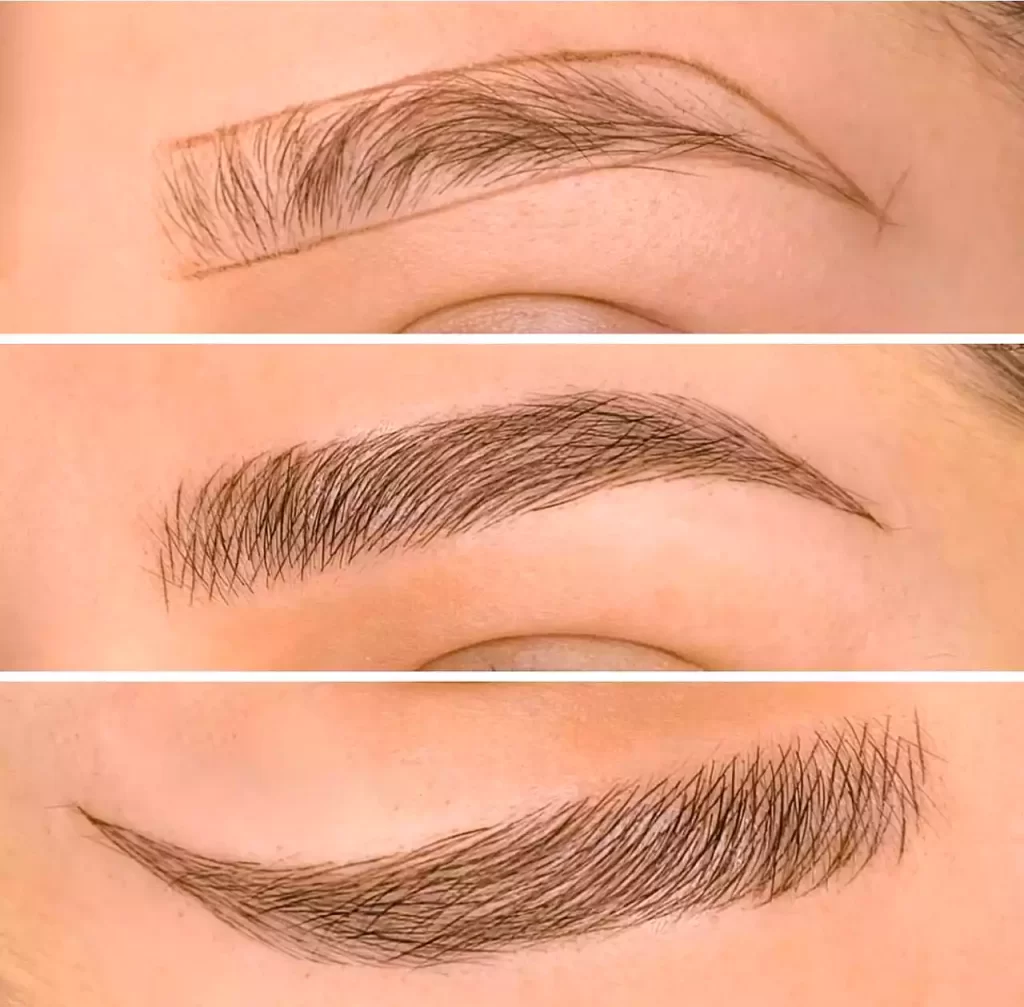
Beautiful Microblading begins with beautiful design.
Before pigment is implanted, the eyebrow shape should be planned according to the client’s individual facial structure.
This includes evaluating:
- Brow length
- Brow height
- Arch position
- Front of the brow
- Tail position
- Left-right balance
- Relationship between the brows and eyes
- Facial proportions
- Existing natural brow hairs
The objective is not necessarily to make the eyebrows perfectly identical.
Why?
Because natural human faces are not perfectly symmetrical.
Trying to force absolute symmetry can sometimes create a less natural appearance.
Instead, the aim is to create visual balance.
The Golden Rule of Natural Microblading
One of the biggest mistakes in eyebrow PMU is trying to make every hair stroke identical.
Natural hair does not behave like a printed pattern.
A professional hairstroke design considers:
Direction + spacing + length + curvature + density + transition.
The strokes should work together as a visual structure.
The front of the eyebrow generally requires a softer transition, while the body and tail can gradually become more defined.
The direction of the strokes should also complement the client’s natural hair growth.
This is what helps create the illusion of real brow hair rather than visible tattoo lines.
Why the Front of the Brow Is So Important
The beginning of the eyebrow has a major influence on whether the result looks natural.
A heavy, dark or overly structured brow front can immediately make a Microblading treatment appear artificial.
For this reason, the front of the brow often requires careful attention to:
- Stroke direction
- Spacing
- Density
- Colour intensity
- Transition into the natural hair
The objective is a soft beginning that gradually connects with the existing brow.
Natural-looking Microblading should have movement — not a stamped appearance.
How Pigment Choice Affects Microblading
Pigment selection is one of the most underestimated parts of permanent makeup.
The colour in the pigment bottle is not necessarily the exact colour that will appear after healing.
The final result can be influenced by:
- Natural skin tone
- Undertone
- Existing brow hair
- Pigment formulation
- Implantation
- Healing
- Sun exposure
- Individual skin characteristics
A professional artist therefore does not choose a colour based solely on:
“What colour do you want?”
Instead, the artist should consider:
What colour will heal appropriately for this particular client?
The objective is not simply to create a beautiful fresh result.
The objective is to create a beautiful healed result.
Why Fresh Microblading Can Look Darker Than Expected
Immediately after treatment, the brows often appear stronger and more defined than the eventual healed result.
This can be caused by several factors associated with freshly implanted pigment and temporary changes in the treated skin.
As the brows heal, the appearance usually softens.
This is why comparing a freshly completed treatment with a healed result can be misleading.
Fresh result ≠ healed result
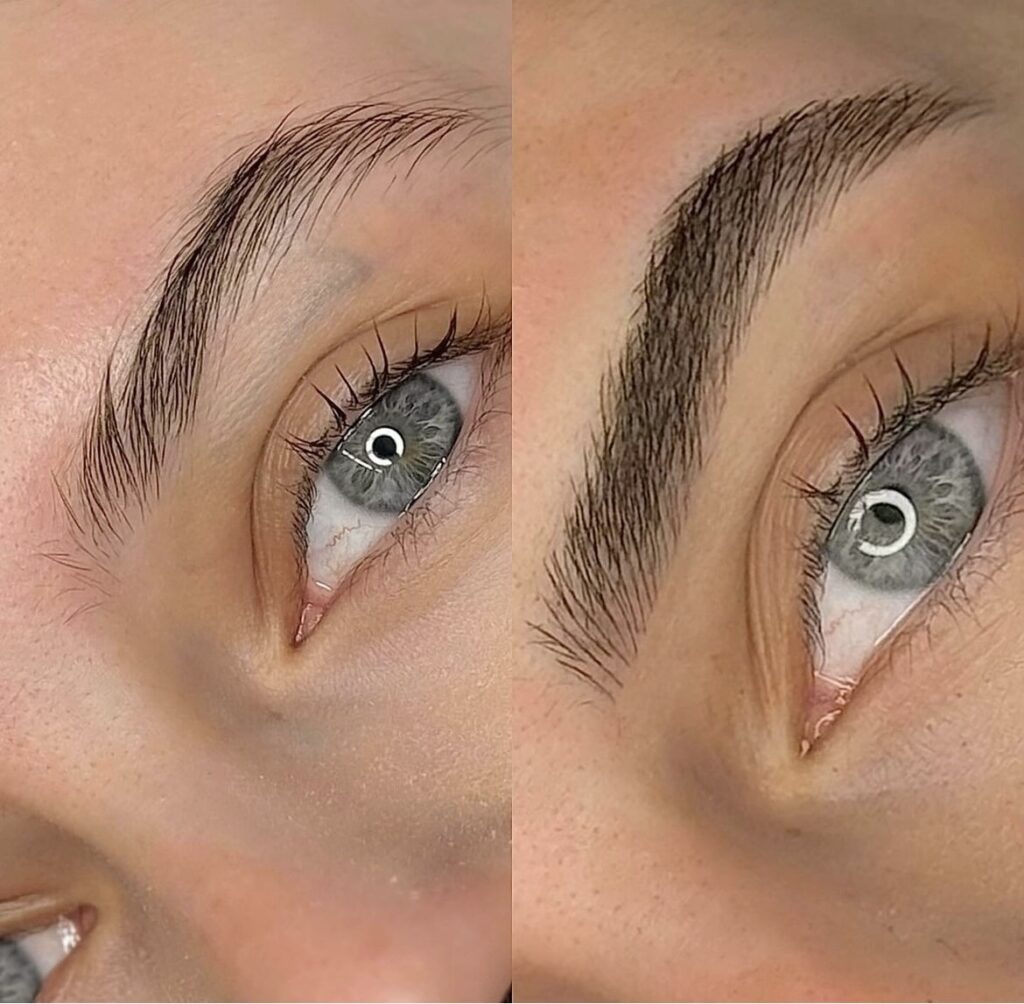
This is also why an experienced PMU artist should be able to show clients healed examples, not only immediately-after photos.
The Microblading Healing Process
Healing is a gradual process.
During the first days and weeks, the appearance of the eyebrows can change.
Clients may notice:
- Darker-looking pigment initially
- Mild redness
- Slight sensitivity
- Flaking or dryness
- Temporary unevenness
- Colour appearing softer later
This is part of why patience is essential.
The eyebrows should not be judged immediately after the procedure.
During healing, do not pick the skin
If the treated area flakes or sheds, clients should not manually remove the skin.
Following the artist’s specific aftercare instructions is important for supporting the healing process.
Microblading Aftercare
Your PMU artist should provide personalised aftercare instructions based on the treatment and your skin.
General principles include:
- Keep the area clean according to the provided instructions.
- Avoid unnecessary touching.
- Do not scratch or pick at the treated area.
- Avoid activities or products that your artist specifically advises against during healing.
- Protect the healing brows from unnecessary irritation.
- Follow the recommended aftercare routine carefully.
Aftercare cannot completely control how pigment heals, because individual skin behaviour is also important.
However, following professional instructions gives the skin the best opportunity to heal properly.
How Long Does Microblading Last?
Microblading is considered a long-lasting form of permanent makeup, but the result gradually fades over time.
There is no single number of years that applies equally to every client.
Longevity can be influenced by:
- Skin type
- Pigment characteristics
- Technique
- Implantation
- Sun exposure
- Skincare products
- Lifestyle
- Individual skin metabolism
- Previous treatments
Clients with oilier skin, for example, may experience a different retention pattern compared with clients with drier skin.
For this reason, promises such as “Microblading always lasts exactly X years” are not a professional way to describe the treatment.
The realistic expectation is that the pigmentation will gradually soften and a future refresh may eventually be desirable.
Can Microblading Be Completely Natural?
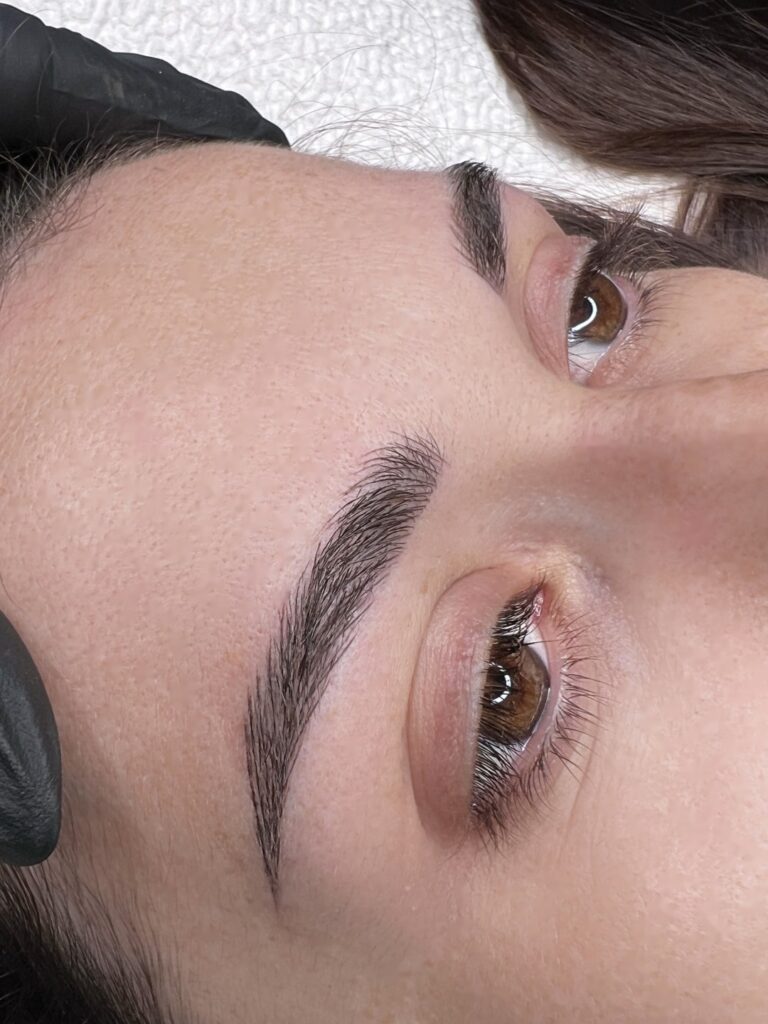
Yes — but “natural” does not mean identical to real hair under close inspection.
The goal of professional Microblading is to create a visual illusion of natural brow hairs from normal conversational distance.
A successful result should complement:
- The client’s facial features
- Natural brow hair
- Skin tone
- Hair color
- Personal style
The treatment should enhance the face rather than become the first thing people notice.
Microblading for Sparse Eyebrows
Microblading can be particularly appealing for clients with sparse areas.
For example, a client may have good natural hair at the front of the brows but noticeable gaps through the body or tail.
In this situation, individual hairstrokes can be used to visually fill selected areas.
However, the artist should always work with the existing natural hair pattern.
The more naturally the implanted strokes integrate with the existing brow, the more convincing the final effect can appear.
What If You Have Almost No Natural Brow Hair?
Microblading may still be possible in selected cases, but the artistic challenge becomes greater.
When there is little or no natural hair to guide the design, the artist must create the visual structure almost entirely through PMU.
In these cases, factors such as:
- Facial anatomy
- Brow positioning
- Skin type
- Desired density
- Hairstroke direction
- Healing behaviour
become especially important.
For some clients with very sparse brows, Powder Brows or Combination Brows may provide a more suitable and stable visual result.
The right answer depends on individual assessment.
Can Microblading Correct Asymmetrical Brows?
Microblading can help improve the visual balance of asymmetrical eyebrows.
However, it is important to understand that PMU cannot completely change the underlying anatomy of the face.
Small differences in:
- Muscle movement
- Brow bone structure
- Eye position
- Natural hair growth
are normal.
The objective is therefore not mathematical perfection.
It is to create a balanced appearance that looks harmonious with the face.
Can You Have Microblading Over Old PMU?
This requires careful assessment.
If previous eyebrow PMU is still clearly visible, especially if the pigment has healed very dark, grey, reddish, blurred or uneven, simply adding new Microblading strokes may not be the best solution.
Adding more pigment on top of existing pigment can make the final result more saturated and less clear.
In some cases, correction or fading may need to be considered first.
More pigment does not always mean a better result.
A professional assessment should come before deciding on the technique.
The Importance of Healed Results
When choosing a Microblading artist, one of the smartest questions you can ask is:
“Can I see your healed work?”
Fresh brows can look beautiful immediately after treatment.
But the real test of PMU is how the work looks after healing.
A strong portfolio should ideally demonstrate:
- Healed results
- Different skin types
- Different natural brow conditions
- Different starting points
- Consistent technique
- Natural colour retention
- Clean hairstroke patterns
Fresh photographs are useful.
Healed photographs are even more informative.
Common Microblading Mistakes
Not all Microblading results are created equally.
Some common problems can include:
Overly Dense Strokes
When too many strokes are placed too close together, they can lose the visual separation needed for a hairstroke effect.
Incorrect Direction
Strokes that do not follow a believable hair-growth pattern can make the brow look artificial.
Excessive Saturation
Too much pigment can reduce the airy, natural quality clients often want from Microblading.
Wrong Colour Selection
A colour that does not work with the client’s natural undertone may heal differently than expected.
Ignoring Skin Type
A technique suitable for one skin type may not be the best choice for another.
Treating Every Client the Same
Perhaps the biggest mistake is using the same design and technique for every face.
Professional PMU should be individualised.
Microblading vs a Brow Pencil
Microblading and a brow pencil serve completely different purposes.
A brow pencil is temporary and can be changed every day.
Microblading provides longer-lasting pigmentation within the skin.
Many clients choose Microblading because they want to reduce the amount of time spent creating their eyebrows every morning.
The goal is not necessarily to eliminate makeup.
Instead, Microblading can create a more defined base so that the client can choose to wear less makeup or add makeup when desired.
Is Microblading a Tattoo?
Microblading is generally classified as a form of permanent makeup or cosmetic tattooing because pigment is implanted into the skin.
However, the technique, pigment behaviour, equipment and intended aesthetic result differ from traditional body tattooing.
Microblading is specifically designed to create a cosmetic eyebrow effect with fine hairstroke patterns.
Because the pigment is implanted into living skin, professional hygiene, sterile single-use equipment and appropriate infection-control procedures are essential considerations.
Why Professional Technique Matters
A Microblading artist needs more than a steady hand.
The procedure requires knowledge of:
Brow anatomy
Facial proportions
Skin characteristics
Colour theory
Pigment behaviour
Hairstroke patterns
Healing
Hygiene
PMU technique
This is why professional Microblading should not be judged only by how thin a stroke looks immediately after it is created.
The real question is:
How will those strokes heal?
A technically beautiful fresh stroke that heals too blurred, too saturated or incorrectly coloured is not a successful long-term result.
The Aphrodite PMU Philosophy
At Aphrodite PMU in Groningen, I approach every eyebrow as an individual design.
With extensive PMU experience and a background in both performing treatments and training students, my goal is not simply to create beautiful brows immediately after the appointment.
I focus on the complete process:
Analyse → Design → Colour Strategy → Technique → Pigmentation → Healing → Final Result
I do not believe that every client needs the same brow shape.
I do not believe that every skin type should automatically receive Microblading.
And I do not believe that the strongest fresh result is necessarily the best healed result.
My priority is creating brows that look balanced, elegant and appropriate for the individual face.
Who Is Microblading Best For?
Microblading may be suitable for clients who want:
- Natural-looking eyebrow enhancement
- The appearance of individual brow hairs
- Fuller-looking brows without a strong makeup effect
- Help filling sparse areas
- More defined eyebrow structure
- A lower-maintenance beauty routine
- A soft and refined PMU result
However, suitability depends on individual assessment.
If your skin type, existing PMU or natural brow condition makes another technique more appropriate, a professional artist should explain that honestly.
The best PMU treatment is not always the treatment you originally searched for.
Frequently Asked Questions About Microblading
Does Microblading hurt?
Sensitivity varies from person to person.
The eyebrow area can be sensitive, and some sensation during the procedure is expected.
Your artist should explain the treatment and comfort measures before beginning.
How long does a Microblading appointment take?
The exact duration depends on the individual treatment, consultation, design and pigmentation process.
A professional appointment should not be rushed.
Time spent analysing and designing the eyebrows is part of the treatment — not wasted time.
Will Microblading look natural?
It can.
The final appearance depends heavily on skin type, technique, pigment selection, stroke design and healing.
Natural-looking Microblading should be customised rather than produced from a standard template.
Can Microblading make my eyebrows look thicker?
Microblading can create the visual appearance of fuller brows by adding hair-like pigmentation to sparse areas.
It does not physically grow new hair.
Can I wear makeup after Microblading?
You should follow the specific aftercare instructions provided by your PMU artist.
During the initial healing period, the treated area generally needs to be protected from unnecessary irritation and contamination.
Can I get Microblading if I have oily skin?
Possibly, but oily skin requires careful assessment.
Depending on the skin characteristics, hairstrokes may heal softer or less distinctly.
In some cases, Powder Brows or Combination Brows may provide a more suitable result.
Can Microblading be removed?
Removal or fading of PMU can be complex and should be approached professionally.
The method depends on factors such as pigment type, depth, colour and the condition of the skin.
If you already have unwanted PMU, professional assessment should happen before adding more pigment.
How often do Microblading brows need a refresh?
There is no universal schedule.
The timing depends on how the pigment has faded and how the healed brows look.
A professional refresh should be based on the actual condition of the brows rather than an automatic calendar date.
The Real Secret Behind Beautiful Microblading
The most beautiful Microblading is not necessarily the one with the most strokes.
It is the one where every decision has a reason.
The right shape.
The right colour.
The right stroke direction.
The right density.
The right technique.
The right approach for the skin.
When these elements work together, Microblading can create an elegant enhancement that feels like a natural part of the face.
At Aphrodite PMU, the goal is not to give every client the same eyebrows.
It is to create the best version of their own brows.
Looking for Microblading in Groningen?
If you are considering Microblading in Groningen, Aphrodite PMU offers personalised eyebrow PMU based on your natural features, skin characteristics and desired result.
During your consultation, we can determine whether Microblading is the right technique for you — or whether another brow technique such as Powder Brows or Combination Brows would create a more suitable result.
Your face is unique. Your eyebrows should be designed accordingly.
Aphrodite PMU — Groningen
Permanent Makeup | Microblading | Nano Brows | Powder Brows | Lip Blush | Permanent Eyeliner
Natural-looking results. Personalised design. Professional PMU.
Book your consultation and discover brows designed specifically for you.
SEO Information for Aphrodite PMU
Primary Keyword:
Microblading Groningen
Secondary Keywords:
Microblading in Groningen
Microblading Netherlands
Eyebrow Microblading Groningen
Natural Microblading Groningen
Permanent Eyebrows Groningen
PMU Brows Groningen
Microblading Healing
Microblading Aftercare
Microblading vs Powder Brows
Natural Eyebrow PMU
Hairstroke Brows Groningen
Written by Forogh Horehnejad – PMU Artist & Trainer at Aphrodite PMU